


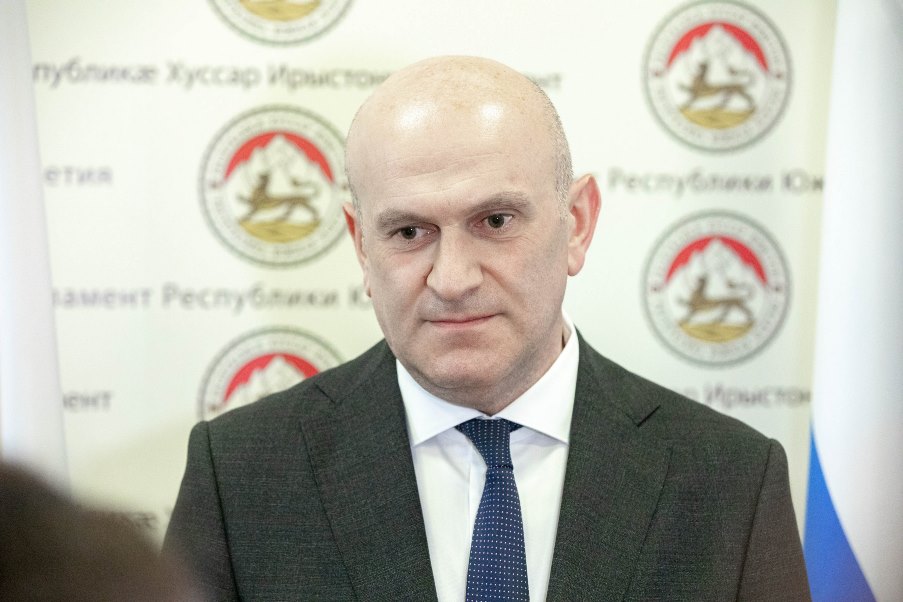

– Akhsar Muratovich, which key stages in the development of the diplomatic service would you single out? How do these historic moments influence its present-day role?
– Thirty-four years is not merely a figure, but a stage symbolising the difficult path of development of the diplomatic service, inseparably linked to the establishment of our State and to the struggle for freedom and independence. In the conditions of permanent Georgian aggression, confrontation and the aspiration to make itself heard in the world, the foreign ministry was called upon to become the voice of the people and to convey its aspirations and rights to the international community. That was a period in which every step was dictated by the need for survival and for the assertion of statehood. It was necessary to create the structure of the ministry, to select personnel and to elaborate the basic principles of foreign policy. The times were difficult and demanded professionalism, patriotism and great fortitude.
Undoubtedly, one of the most significant and decisive stages of our modern history was the recognition of South Ossetia's independence by Russia in 2008, as well as by a number of other States. That decision opened new horizons for the development of the country and of its foreign policy. The process of establishing official diplomatic relations with friendly countries began, which made it possible to move from declarations to practical interaction, the exchange of experience and joint work. The Ministry of Foreign Affairs of the Republic of South Ossetia has always placed at the forefront the protection of national interests and the sovereignty of the country. That principle remains unchanged.
The Ministry of Foreign Affairs of the Republic of South Ossetia, notwithstanding the turbulence in international relations and new challenges, continues its work to strengthen the Republic's positions and to expand the circle of friendly countries.
I express my gratitude to all those who have worked within the walls of our ministry over the years. I address particular words of appreciation to those who built the Ministry of Foreign Affairs of the Republic of South Ossetia from scratch, who put their soul and strength into its formation. Their experience, wisdom and devotion to the cause are a priceless heritage that we carefully preserve and augment. On this day we remember and pay tribute to the memory of staff members who are no longer with us. Among them is Yuri Gagloity, Professor and historian, who headed the ministry in 1996–1998.
– In the current geopolitical situation, the role of the foreign ministry is growing. What are the main challenges facing the Ministry today?
– The Ministry is a key instrument in shaping and implementing foreign policy aimed at protecting national interests, strengthening sovereignty and creating favourable conditions for the development of the Republic. The Republic is the target of information attacks and attempts to discredit it. Countering disinformation and propaganda and forming an objective perception of South Ossetia on the international stage is a difficult but extremely important task.
The main source of concern for the security of the Republic of South Ossetia is Georgia. Any escalation in the region, which is an arena of interests of various world powers, may directly affect South Ossetia, destabilise the situation and create new threats. In close cooperation with our Russian colleagues, we analyse the trends and events unfolding. This includes participation in the Geneva International Discussions on Security and Stability in Transcaucasia. This issue becomes particularly important against the backdrop of Georgia's refusal to sign a legally binding agreement on the non-use of force against South Ossetia.
The reluctance to formalise commitments to renounce violence undermines efforts to stabilise the region and increases the risk of new flare-ups.
The Geneva Discussions are the only international format for maintaining direct dialogue between South Ossetia and Abkhazia, on the one hand, and Georgia, on the other. Only through dialogue and mutual recognition of the interests of all parties is it possible to build a solid foundation for cooperation and the prevention of conflicts. Together with our Abkhaz and Russian partners, we advocate continuing work in this format and seeking new ways to enhance its effectiveness.
– Russia is our key ally. Which areas of cooperation with the Russian Federation do you consider priorities?
– South Ossetia and Russia are bound by long-standing and solid relations based on mutual trust and respect and on common interests, and this is reflected in all spheres of cooperation. The strategic partnership between the Republic of South Ossetia and the Russian Federation plays a decisive role in ensuring the stability and development of the Republic. Interaction between our countries is at a high level and covers a wide range of areas. Cooperation in the sphere of security is of particular importance. Russian servicemen stationed in South Ossetia on the basis of inter-State agreements play a key role in maintaining peace and preventing any threats to stability in the region. Russia actively supports the socio-economic development of the Republic. This assistance is aimed at implementing long-term and sustainable programmes and improving the healthcare system, and at developing cultural ties and sport through joint projects and events.
Russia's role in promoting the interests of the Republic of South Ossetia on international platforms and in strengthening its sovereignty is also important. Regular consultations are held between our ministries, foreign policy positions are coordinated on issues of mutual interest, and efforts are being made to establish dialogue with States interested in building constructive relations with the Republic of South Ossetia.
We are grateful to Russia for its unwavering support and are confident that our alliance will only grow stronger, to the benefit of our peoples. An important event was the visit of President of the Republic of South Ossetia Alan Eduardovich Gagloev to Moscow and his participation in the events marking the 81st anniversary of Victory in the Great Patriotic War, and his meeting with President of the Russian Federation Vladimir Vladimirovich Putin, within the framework of which the Treaty on the Deepening of Allied Interaction between the Republic of South Ossetia and the Russian Federation was signed.
– South Ossetia has been recognised by a number of countries. What efforts is the Ministry making to develop and deepen diplomatic relations with those States?
– The recognition of South Ossetia's independence by a number of States was an important step on the path to strengthening its sovereignty and its integration into the world community.
The Ministry of Foreign Affairs of the Republic of South Ossetia continues its active work to deepen diplomatic relations with the countries that have already recognised its independence, and to create conditions for expanding the geography of its foreign policy contacts. South Ossetia strives to establish and develop full-fledged diplomatic relations with each of its partner States. This opens up new opportunities for economic interaction, for strengthening cultural ties conducive to mutual understanding and the rapprochement of peoples, and for the development of tourism, and helps to build a positive image of the Republic and to introduce the world to its rich cultural heritage.
– What steps are being taken to expand the geography of recognition of the Republic?
– For South Ossetia, it is important to build friendly relations and establish contacts throughout the world. We attach particular importance to the development of cultural dialogue. The work of the representatives of the Ministry of Foreign Affairs of the Republic of South Ossetia in various countries is directed to this end, including in Italy, which acts as a "bridge" connecting peoples and contributing to the deepening of mutual understanding. It is precisely cultural bridges that help us to find like-minded people and to build genuine friendship. This also applies to the further intensification of contacts with our Belarusian colleagues, including the development of interaction with the structures of the Union State of Russia and Belarus, primarily in the cultural and humanitarian spheres, as well as interparliamentary cooperation through the Parliamentary Assembly of the Union State.
South Ossetia is open to the world; we are ready to share our cultural heritage and to discover the culture of other peoples. It is precisely through mutual understanding and respect for cultural values that we can build truly strong and long-term ties. Particular attention is given to establishing and developing cooperation with the countries that show an interest in South Ossetia. The Ministry strives to convey objective information about the Republic of South Ossetia to the world public, to dispel existing stereotypes and to form a positive image of the Republic. Support for and interaction with the Ossetian diaspora abroad is an important element of foreign policy; representatives of the diaspora can act as unofficial representatives of the Republic and contribute to its visibility.
We are aware that the process of international recognition is complex and multifaceted. But through purposeful work, the Republic strives to expand its presence on the world stage and to strengthen its sovereignty. Despite the existing opposition, work in this direction will continue.
– The situation in the Middle East is a source of serious concern. How do you see the possible impact of these processes on the security of the Republic of South Ossetia?
– The situation in the Middle East is one of the most acute and unpredictable in the modern world. Conflicts and political instability in that region cannot but cause serious concern. Global processes in one way or another affect all countries. Destabilisation in the Middle East may lead to the activation of terrorist groups and their attempts to extend their influence, and may give rise to large-scale migration flows, which may create certain challenges to stability and security. Significant geopolitical shifts in the Middle East may affect the overall balance of forces in the world and in the region in which South Ossetia is situated.
The situation in the Middle East, in a region with a historically high level of conflict potential, where the interests of regional countries and of extra-regional actors intersect, is very complex. The security of South Ossetia largely depends on the stability of its neighbours and key partners, above all Russia.
The foreign policy stance of the Republic of South Ossetia is oriented towards strengthening relations with Russia — the guarantor of its security and stability.
– What tasks face the ministry in terms of the professional growth of its staff and ensuring continuity in the diplomatic sphere?
– The Ministry of Foreign Affairs of the Republic of South Ossetia is in a constant search for ways of its own development. The ministry faces tasks aimed at enhancing the effectiveness of its work and ensuring the sustainable development of the diplomatic service. Diplomacy is not confined to political issues alone; it is necessary to develop trade ties and to promote cultural and educational programmes that contribute to strengthening cooperation with other countries.
The further development of the Ministry of Foreign Affairs of South Ossetia is seen as a progressive process based on a clear understanding of the tasks at hand, the constant improvement of the professional skills of staff members and the ensuring of sustainable continuity in diplomatic work. Only in this way will the ministry be able to effectively carry out the tasks entrusted to it of upholding and advancing the interests of the Republic of South Ossetia.